
What Are Dental Crowns?
Dental Crowns, or dental caps, are protective shells which can be made of various materials, from metals to ceramics. Cracked, decayed, or otherwise damaged teeth may be repaired by a crown fitted onto them, restoring tooth strength, and returning the original look to the tooth. The procedure begins with a local anesthetic, allowing the dentist to reshape the tooth and preparing it to mold perfectly with the crown. The crown is then securely attached to the tooth, and the tooth strength and beauty is restored.
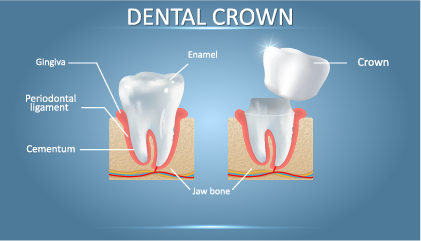
Types of Crowns
Crowns can be made out of zirconia, porcelain, or a combination of porcelain and a metal alloy. Several factors go into determining the most ideal crown material for each tooth and each patient.
- Zirconia crowns offer the strength and wear resistance of metal alloys along with the esthetics of porcelain.
- Crowns consisting solely of porcelain will have a more natural look, but will be weaker and more susceptible to chipping than a crown made of the porcelain/metal hybrid.
- Due to the strain caused while chewing or eating, the stronger hybrid crowns are usually preferred for back teeth over their all-porcelain counterparts.
- Full porcelain crowns will usually work well for front teeth.
Dental Crown Procedure
Preparing for a dental crown usually requires at least two visits to the dentist.
First Step: Prepping the Tooth
When you arrive for a dental crown appointment the dentist may start by taking x-rays of the tooth and checking for decay, root health and any potential risks. Once the status of the tooth is determined the tooth will be filed down and reshaped to fit the crown. Impressions will be taken and sent to the dental lab to create the custom crown. The dentist will make sure the shape and color of the crown matches your natural teeth as closely as possible. Before you leave the first visit the dentist will provide you with a temporary crown to wear until the permanent crown has been created.
Second Step: Placing the Dental Crown
At the second visit your permanent crown will be placed and cemented in place. The dentist will make any final adjustments and provide you with information for care.
How Long Do Dental Crowns Last?
Dental crowns last anywhere from 5 to 15 years on average. Studies have shown a 90% survival rate at 10 years. Many patients have crowns that last decades. The lifespan of the crown will depend on how well you care for it. Good oral health habits like regular brushing, flossing and dental exams will extend the lifespan of a dental crown. Avoiding habits that add to dental wear and tear such as grinding or clenching your teeth will also help the dental crown remain in good condition for years to come.
The experienced dentists at Bella Dental have successfully performed countless dental crowning procedures, and can do the same for you. Contact our Greensboro dentist office today to learn more about dental crowns and how we can help you!